


Miniscal Tears
In this informative guide, Dr. Balavardhan Reddy provides a detailed understanding of meniscal tears, a common knee injury. This comprehensive overview covers the knee’s anatomy, causes, symptoms, diagnosis, and treatment options.
Anatomy of the Knee:
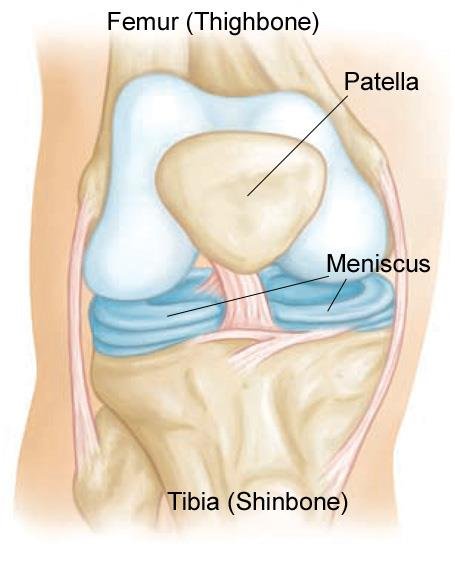
Dr. Balavardhan Reddy begins by explaining the knee’s complex anatomy. It comprises three main components: the femur (thighbone), patella (kneecap), and tibia (shinbone). Articular cartilage covers these bones, facilitating smooth movement and acting as a shock absorber. Additionally, two C-shaped cartilaginous cushions known as menisci offer secondary shock absorption. Ligaments stabilize the knee, while the synovial membrane releases lubricating fluid, reducing friction and nourishing the cartilage.
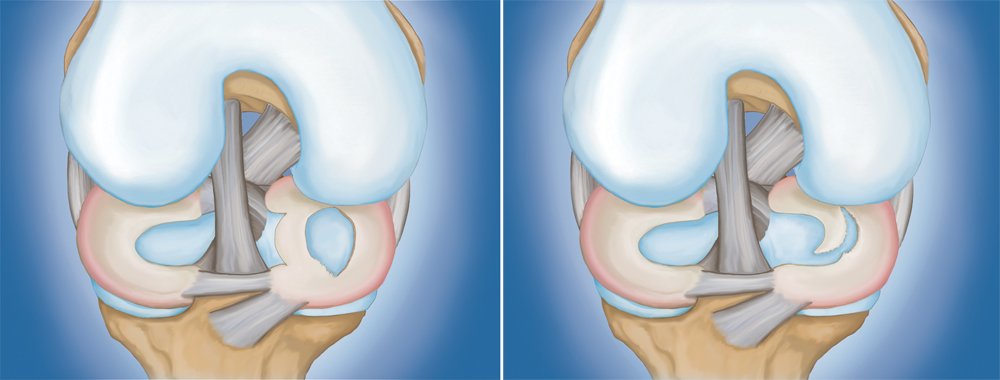
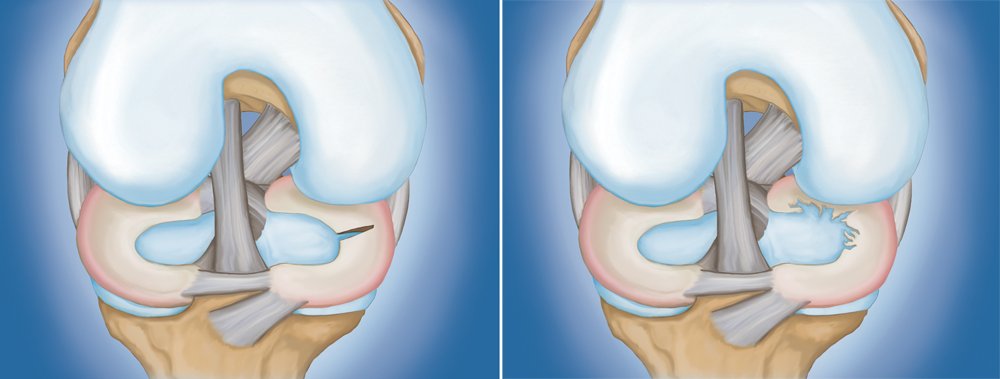
(Left) Bucket handle tear.
(Right) Flap tear.
(Right) Degenerative tear.
Causes of Meniscal Tears:
Dr. Balavardhan Reddy details that meniscal tears frequently occur in athletes, especially those involved in contact sports or activities involving squatting and twisting motions. These tears may result from sudden, forceful contact or repetitive movements. Chronic, degenerative tears can also develop over time due to repetitive use, affecting adults of all ages.
Symptoms:
Meniscal tears manifest with various signs and symptoms, including:
- Popping sensation or sound in the knee
- Swelling or stiffness in the knee joint
- Increased pain when twisting or rotating the knee
- Difficulty straightening the knee fully
- Limited range of motion, with sensations of catching or locking
- Risk of a loose meniscal piece entering the joint, causing instability
Dr. Balavardhan Reddy underscores the importance of consulting a physician when experiencing these symptoms to prevent further complications.
Diagnosis:
Diagnosing a meniscal injury involves a combination of patient history, physical examination, and imaging studies. Dr. Balavardhan Reddy explains that physicians assess knee range of motion, stability, swelling, tenderness, and strength compared to the uninjured knee. Special tests like the McMurray test may be performed to provoke pain. X-rays and MRI scans help evaluate bone damage, osteoarthritis, and the extent and location of the tear.
Normal knee anatomy. The menisci are two rubbery disks that help cushion the knee joint.
Types of Meniscal Tears:
Meniscal tears vary in nature and location. Dr. Balavardhan Reddy highlights that tears may occur in the anterior horn, body, or posterior horn of the meniscus, further divided into outer, middle, and inner thirds. Tear location impacts the potential for healing, with outer third tears having better healing prospects due to richer blood supply.
Treatment Options:
Dr. Balavardhan Reddy outlines treatment options based on tear severity, patient age, activity levels, and tear location:
- Non-Operative Treatment: RICE approach (Rest, Ice, Compression, Elevation), anti-inflammatory medication, and physiotherapy may suffice for small outer-edge tears that respond well to conservative care.
- Operative Treatment: Surgical intervention becomes necessary when conservative methods are ineffective or for specific tear types.
- Partial Meniscectomy: Suitable for inner two-thirds tears with limited healing potential. Involves trimming the damaged meniscus to stabilize the rim.
- Meniscal Repair: Appropriate for clean tears in the outer third with good blood supply. Surgical instruments repair the damaged meniscus.
Post-Operative Recovery:
Dr. Balavardhan Reddy emphasizes that rehabilitation is vital post-surgery. Physical therapy exercises help strengthen leg muscles, restore knee function, and ensure proper healing. Recovery duration varies based on the treatment approach, with partial meniscectomy recovery lasting about six weeks and meniscal repair taking three to six months.
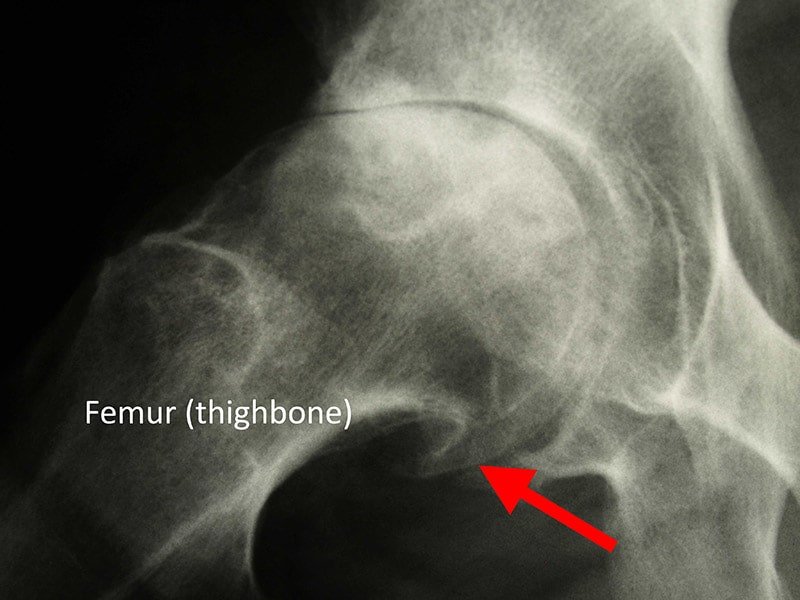
In this X-ray of an arthritic hip, the arrow indicates a large bone spur (osteophyte) at the bottom of the femoral head.
Conclusion:
Dr. Balavardhan Reddy provides valuable insights into meniscal tears, from their causes and symptoms to diagnosis and treatment options. Understanding these aspects is crucial for individuals seeking effective management of this common knee injury.